Sunday, 7 April 2013

We can see by KB

KB was very excited on Friday to be presenting his "We can see" book to Team Jelleybean.  KB and his family have captured a number of exciting photos from March Break and KB added text to each page which he read to the class.  


WE  CAN  SEE


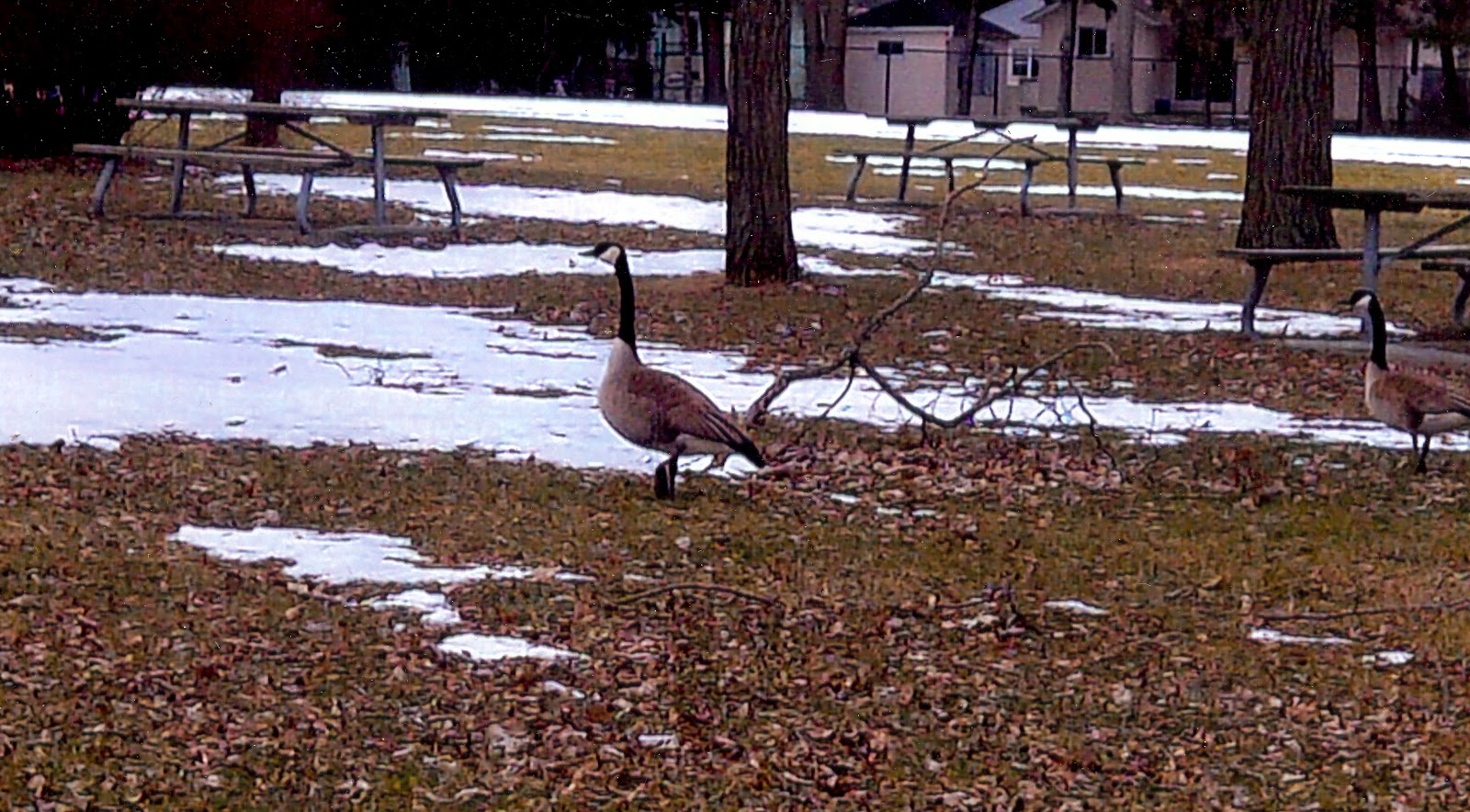
We can see geese.


We can see tree tapping.
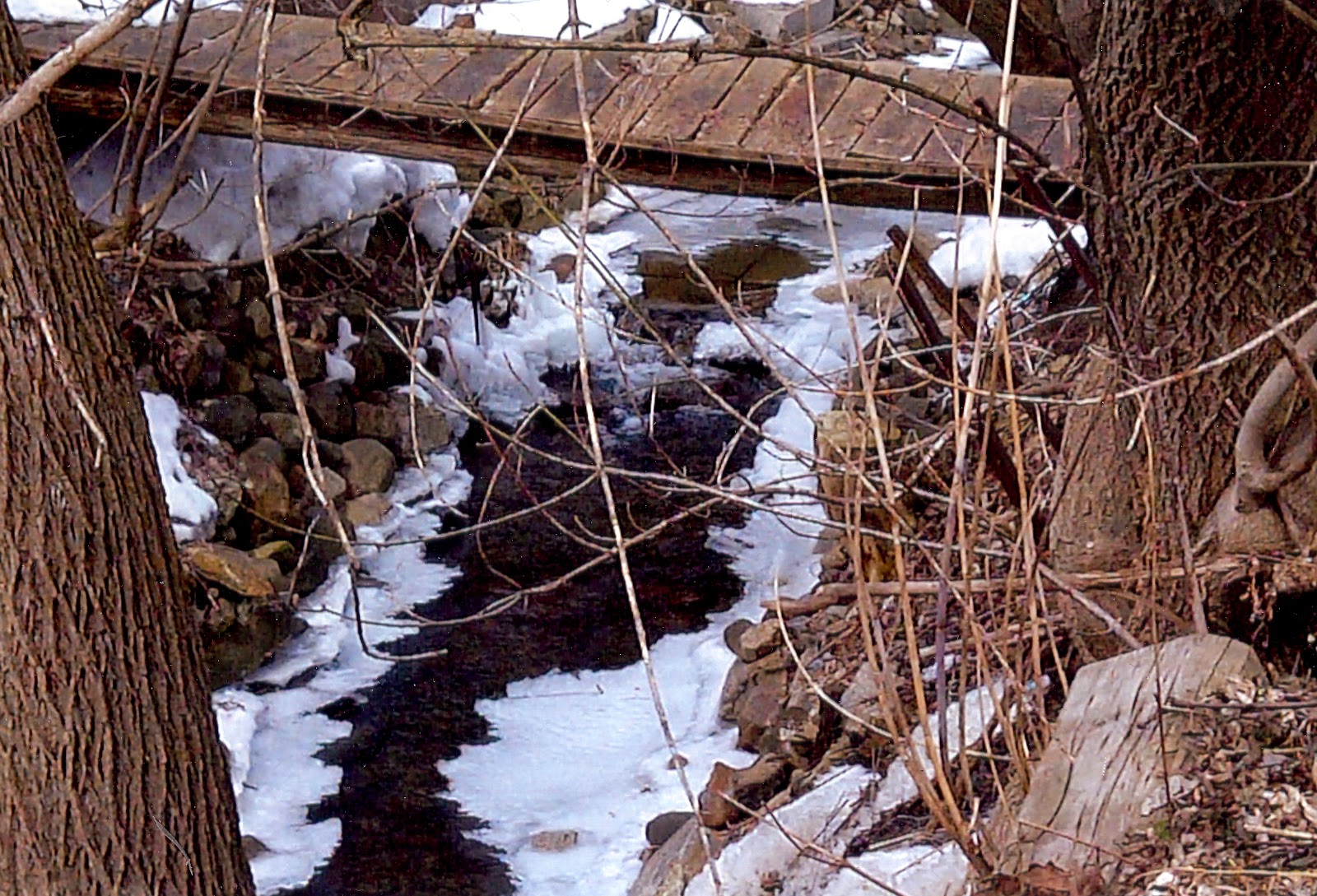


We can see running water.


We can see sprouting flowers.


We can see a robin. 

Students were asked to think about a compliment or connection to KB's book.  Here is an example of thinking that was shared!

BG - I liked the robin because yesterday I saw a robin in my backyard. 
MJ - How do you know it's a robin?
KB - It's a robin because robins have black and orange on them.
NB - You mean red?
KB - It looks like orangey red. 
LT - I like the same thing BG said.
MJ - What did he say?
BG - I like the robin.
LT - I like the robin because it's orange and black and I never seen a robin. 

I am wondering where the thinking and connections to all of the amazing "We can see" projects will lead us next?  

Perhaps a group will extend their thinking around a visit to the maple sugar bush (i.e. What is tree tapping?  How do you make maple syrup?  Can you get syrup from any tree?).  Will this investigation also lead to a connection to signs of spring? (i.e. Why do we only tap trees in the spring?).

 Perhaps a group will extend their thinking around signs of spring, an idea KB provoked in his book and that will be highlighted as we take a walk next week around our school yard to see what changes have occurred.  (i.e. What do you see?  What are you thinking? How do you know spring is here?  What changes can we see?  Why is there so much MUD?).

Perhaps a group will continue their investigation into animals whereabouts now that the snow has gone and spring is in the air.  (i.e. Where are bees now?  What are bears doing?  What can we learn about robins? Where have they been all winter? Where have worms been all winter?  How do the robins know where to find them?). 

Time will tell what students new inquiry focus will be.  Stay tuned!    


Wednesday, 3 April 2013

March Break Challenge (We Can See connections continue)

I am so impressed with the response we got to our March break challenge!  

Here are two more 'We Can See' projects completed by students on Team Jelleybean.  Both LF and RL had exciting March Break adventures they wanted to share.  Parents sent in pictures on a memory stick and the students then created their own iMovie, choosing a selection of photos and creating text.  As their editor I checked spelling before their work was published. 

Watch now as LF  takes you on an adventure to the sugar bush.  


In RL's video, he shares some of the fun things he enjoyed playing with over the break.  He also attended a fabulous Raffi concert! 


What did you do over March break?
Both students would love to hear any comments and connections from those who view. 


Tuesday, 2 April 2013

How many beavers in the lodge?


That is the question our mathematicians tackled a week ago.  But how did we get to thinking about this question?

We have had an inquiry connected to animals that started early in the fall.  


Throughout the winter this inquiry has continued to provoke questions and ideas that a group of boys, who particularly love this centre, have had many discussions through small group oral language sessions, working on holding their own idea and listening and responding to others.  


Some of our wonderings:
Where are bears in winter?
Where are frogs in winter?
Where are snakes in winter?
Where are owls in winter?   


MJ - Where is the bear in winter?
KL - In a cave.
MJ - What did KL say?
JC - In a den or lair.
LF - A den is a bears' lair.
JC - This is a den.
KL - No it’s a cave.
LF - Sometimes bears go in a cave and sometimes bats do.
MJ - What did L tell us about bats?
JC - They sleep in a cave. When they sleep they hang upside down and they sleep upside down and they cover their head with their wings.
LF - They wake up in night.
MJ - Do they wake up in winter?
LF - No they wake up in summer when it is nice.
MJ - Where did you say snakes are in winter K?
KL - A snake hides under a big, big rock.


They created a wall story together, sharing information from research they had done as a small group.  The boys continually brought their questions and thinking back to the whole group, where new wonderings were voiced (i.e. RH - Where are bees in winter?)


When JC came up with a question “Where are beavers in winter?” it  led to some amazing research and ultimately some mathematical thinking.  

To understand a little more about beavers we watched some fantastic footage from Discovery Education: 

How Do Beavers Prepare for Winter

The Intricate Process of Building a Beaver Lodge 


Then we saw some amazing beaver footage from the following link from Calgary Alberta. 


“How many beavers could be in that lodge?”


It was when we watched a small portion of this next video clip Winter Beaver Lodge (stopping at 1:32) that we discovered some data to help us with our problem!


Students shared what information they had heard in the clip. Most agreed (thumbs up) that probably there was a mom, dad, 4 babies from this year and 4 babies from last year. (Note: The girl said there could be 3 or 4 each year so we decided to go with 4).


Using our usual prompts:
How many? 
How will you show it?
students were encouraged to share their thinking.  These are some of the results (I hope to show the variety of thinking as it was recorded). 

RH attempts to draw beavers. 


NB uses lines to represent his thinking.


DG explains his thinking: 4 and 4 and 1 adult and 2 are the mom and dad.  That's 11.
MJ - How do you know it's 11? 
D - I just know.


KB explains his thinking:
8 beaver babies and 2 more make 10.  That’s the adults is 10.


EA explains her thinking: 
Mom and dad, 4 last year, 4 this year.
I know 4 and 4 made 8 and 2 more makes 10 cause I just counted in my head and 1 more makes 9 and 1 more makes 10.
(EA demonstrates grouping by 4’s and then counting on).


LF explains his thinking:
 4 and 4 make 8 and 2 more makes 10.  (Here he is trying to show a string as he talks though his thinking.)


RK explains his thinking: 
4 and 4 makes 9.  I think it’s 9.


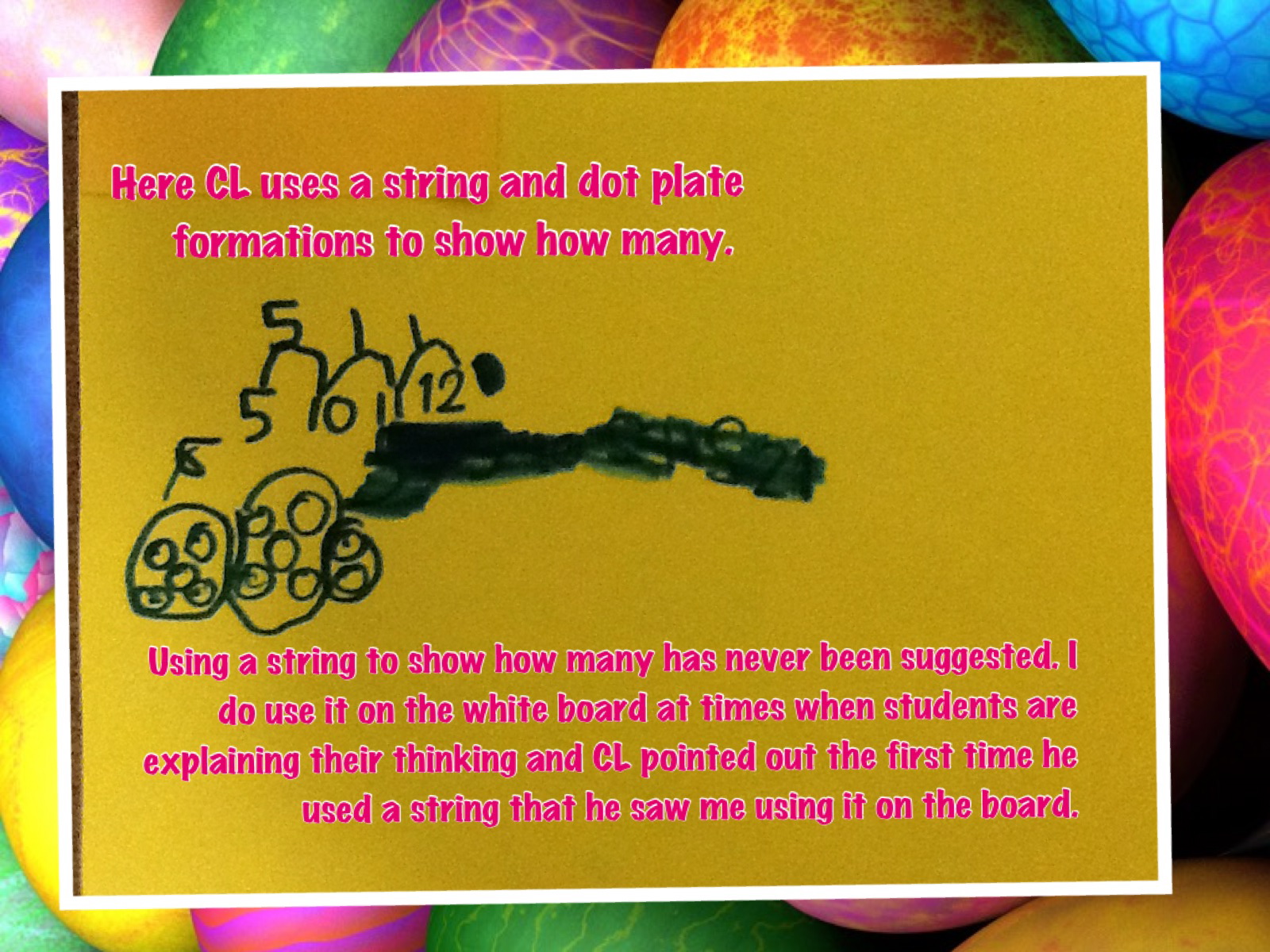
CL uses a string to show his thinking. He then uses words to explain his thinking (i.e. “Four plus four plus one plus one equals ten.”).


JC picture shows the mom and dad and babies (Remember our prompts:  How many? How will you show it?).  He demonstrated counting one by one to figure out how many but got confused when he got a different number each time.  (JC continues to work on the strategies of tagging and counting slowly)


Saturday, 30 March 2013

Dear Easter Bunny


Our latest math problem evolved from BG's decision to blog the Easter Bunny.  

BG initially asked  the Easter Bunny “How many eggs are you going to get?”  "Easter Bunny will you put candy in my egg?"


BG was very excited when Mr. Bunny responded, asking the question “How many eggs do you think I should get for each person?” 
BG wrote him back letting him know that he thought 12 eggs would be great.


The Easter Bunny responded asking BG to show him how many 12 is. (Mr. Bunny has trouble remembering numbers!)  


Our team jumped to the challenge of reminding Mr. Bunny how many 12 is, trying to be as efficient (mathematicians always try to be quick and efficient) as can be as they recorded their ideas. 

Please keep in mind that I have never suggested ways to record information.  Over the course of the year students have shared with each other how using dots, lines, etc. is a much more efficient way to record than trying to draw objects.  Students can now be observed using information (learning) gathered from our daily "brain work".  During these sessions students are prompted with "How many?  How did you see it?" when using tools such as dot plates, rekenrek, 5 frame, 10 frame and quantity number line.  The use of a string to show information has been modelled as students explain their thinking but has never been 'suggested' as a way to record.  CL can explain how efficient he finds this strategy and that he initially used it because he saw it on the white board.

These are some of the reminders created to help Mr. Bunny.


Mathematicians always want to show all of their work so students are encouraged to simply put an X through unwanted information rather that erasing or covering with 'magic tape'. 


Some students, particularly JK, need more practice with "How many?" and "How will you show it?"  Engaging small groups of mathematicians (with similar abilities) in a variety of games continues to be a focus to help encourage growth and development of understanding.


Friday, 29 March 2013

We Can See by EA

This is EA's second i movie.  She was inspired to make this video after seeing the results of our class "Snow On Me" (more We Can See connections) movie and also realizing her friend RH was making one!  

EA independently chose what pictures she wanted to use and then added the text to each slide, using a variety of writing strategies.  Finally she selected the music to attach to her movie. 

As her editor, I then checked spelling and made any additions (sounds she couldn't hear when she stretched a word i.e. bike rack, or tricky sounds she perhaps wouldn't know i.e. freaky). EA understands that having work edited is something that is done when it is being viewed by others.  Enjoy!


EA would love to receive comments, connections, wonderings!

Sunday, 24 March 2013

Snow on me (More We Can See connections!)

We have had some amazing snowfalls in February and March this year.  Each time new snow fell groups from Team Jelleybean took the opportunity to venture out to capture what "we can see" around our school.  

Initially we made this class video together.  CB's final 3 words at the end of the video captures the excitement and engagement of this experience!


RH had expressed interest in making her own video on the IMac when she saw her friend EA creating one using photos she had brought from the Santa Claus parade.  RH was excited to take on this challenge using the photos we took in the snow, choosing which ones suited her video and then writing the text to go with each video.  

RH accessed a number of different writing strategies to write the text, including using environmental print (i.e. Snow on me poem we had worked on during shared reading, our word wall, words in familiar text in her book box, as well as stretching words and recording the sounds she could hear).  

As her editor it was my job once all the writing was done to check for spelling, since this was to be a published work.  

Here is RH's video.  She would love feedback in the form of comments, questions, wonderings.  Enjoy!


EA is also now working on her second video, choosing from the multitude of photos captured on our snow adventures, so stay tuned!


Thursday, 21 March 2013

Kaylynn Makes Cupcakes


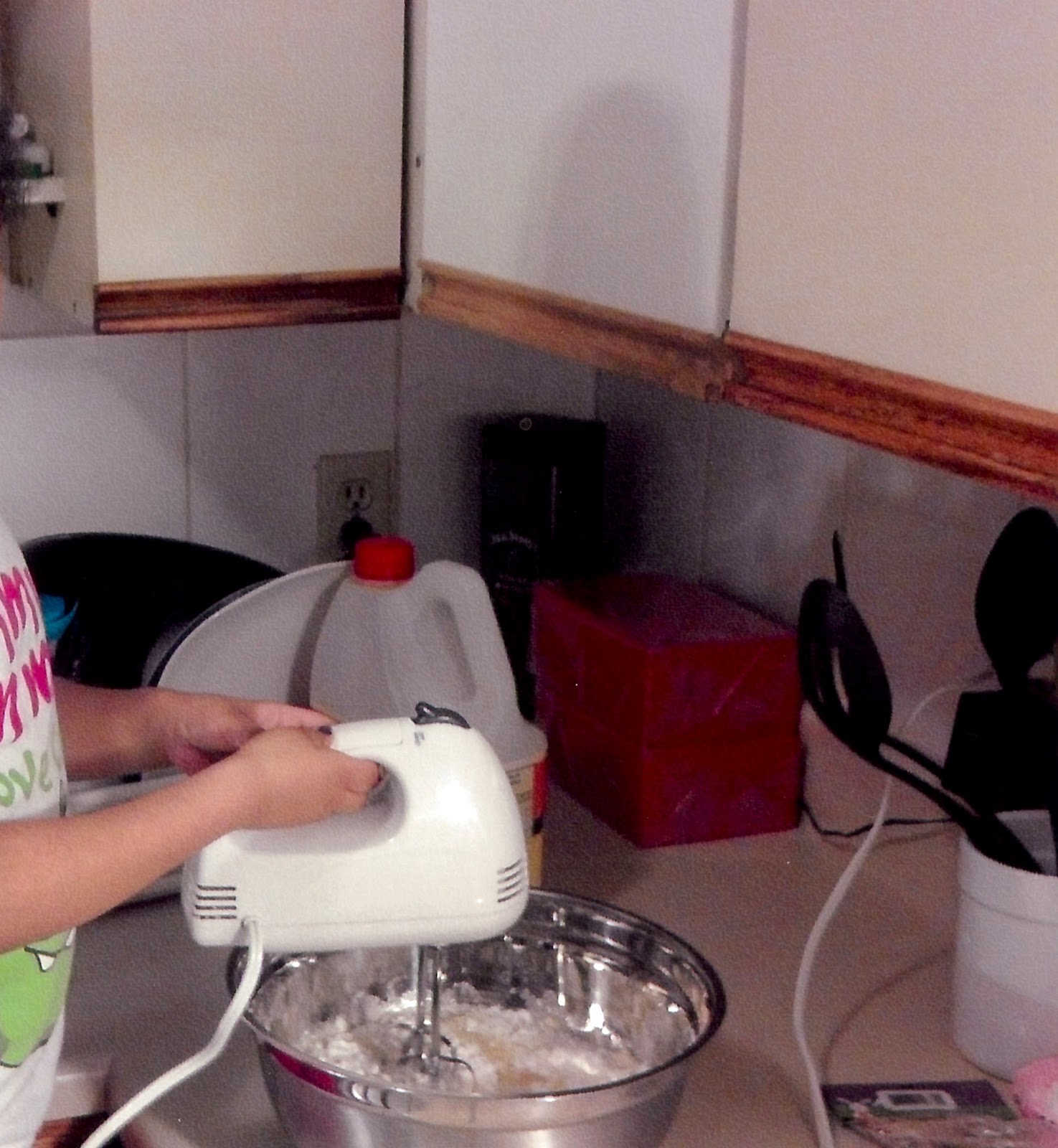
During the March Break Kaylynn and her mom made yummy cupcakes together. 

Follow along as Kaylynn describes the procedure for making cupcakes.  Maybe you will be inspired to make cupcakes too!


I mixed them.


I poured them in the muffin pan.


They grew bigger and grew bigger.


They were done.


I frosted them.


I decorated them.


I eat them!


After Kaylynn described how to make cupcakes some students shared their thoughts. 


A compliment:

NB:  I liked when she said “I eat it!”

A connection:  

SB:  I like frosting.

Wonderings:

MJ: How did they taste?

Kaylynn:  Good

MJ:  How many did you eat?

Kaylynn: 2

Have you ever made cupcakes?  Please share your compliments/connections/wonderings with Kaylynn.